
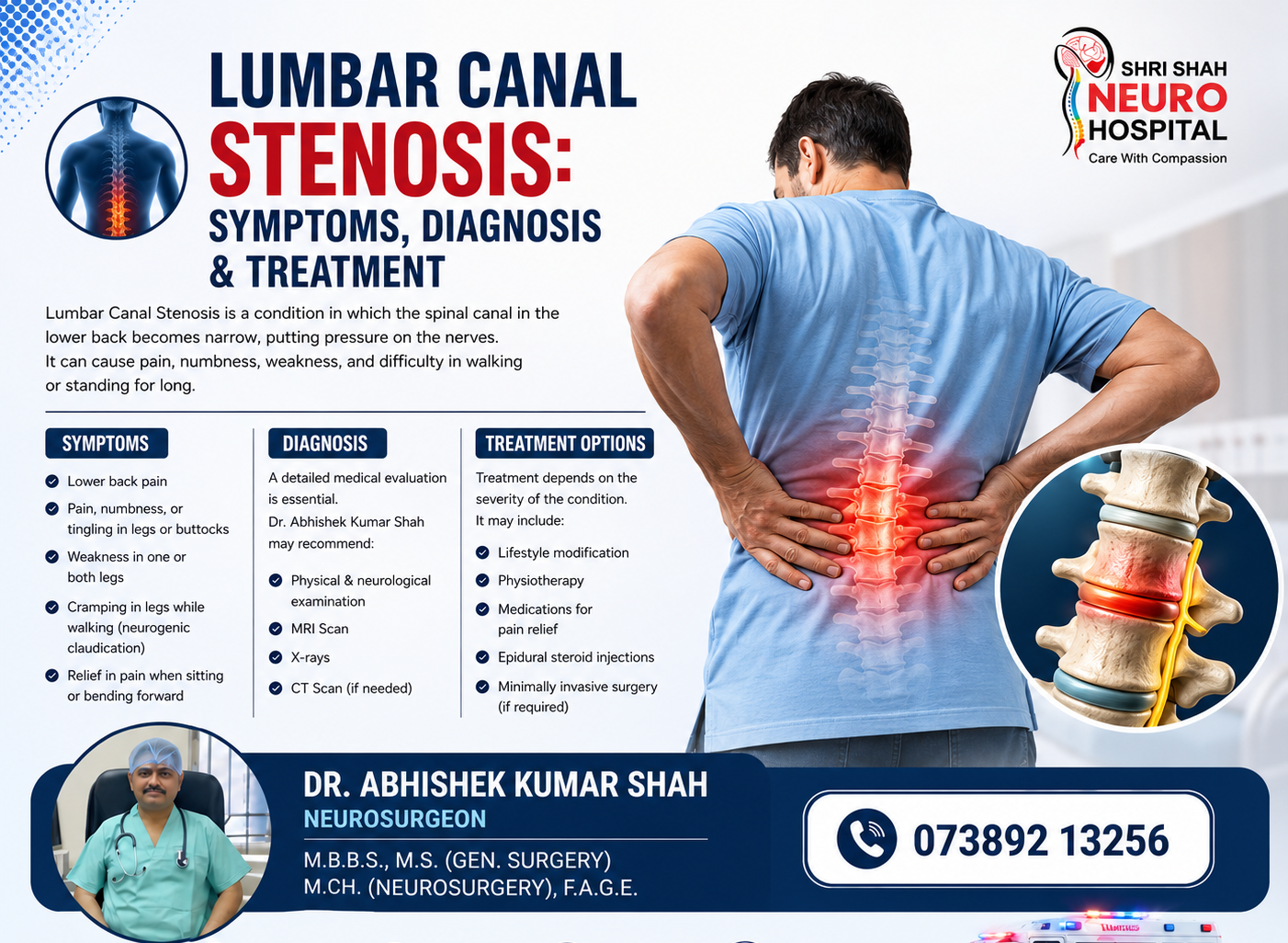
Persistent lower back pain, numbness in the legs, tingling sensations, or difficulty walking should never be ignored, especially if these symptoms gradually worsen over time. One of the common spinal conditions responsible for these problems is Lumbar Canal Stenosis, a condition in which the spinal canal in the lower back becomes narrow and compresses the spinal nerves. Understanding Lumbar Canal Stenosis: Symptoms, Diagnosis & Treatment helps patients recognize the warning signs early and seek timely medical care before permanent nerve damage develops.
Lumbar Canal Stenosis is most commonly seen in older adults due to age-related changes in the spine, but it may also occur because of spinal injuries, slipped discs, arthritis, thickened ligaments, or congenital spinal abnormalities. Initially, symptoms may appear only while walking or standing for long periods, but as the condition progresses, patients may experience severe leg pain, weakness, balance problems, and reduced mobility that significantly affect daily life.
At Shri Shah Neuro Hospital, Bilaspur, patients receive advanced diagnosis and treatment for spinal disorders under the expert care of Dr. Abhishek Kumar Shah, an experienced Neurosurgeon and Spine Surgeon with over 14 years of experience. Using advanced diagnostic techniques and personalized treatment plans, he provides both non-surgical and surgical management for Lumbar Canal Stenosis, helping patients relieve pain, restore mobility, and improve their quality of life.
Best Neurosurgeon in Bilaspur for Lumbar Canal Stenosis Treatment – Dr. Abhishek Kumar Shah
Spinal disorders can interfere with walking, working, sleeping, and performing routine activities. When spinal nerves become compressed, patients may experience persistent back pain, leg pain, numbness, muscle weakness, or difficulty maintaining balance. Early diagnosis is essential to prevent permanent nerve damage and improve long-term recovery.
Dr. Abhishek Kumar Shah provides comprehensive diagnosis and treatment for a wide range of brain and spine disorders using advanced neurosurgical techniques and modern medical technology.
His expertise includes:
✔ Lumbar Canal Stenosis Treatment
✔ Cervical Spine Disorders
✔ Slip Disc (Herniated Disc)
✔ Sciatica Treatment
✔ Spine Trauma Surgery
✔ Brain Tumor Surgery
✔ Stroke Management
✔ Spine Tumor Surgery
✔ Pediatric Neurosurgery
✔ Neurotrauma & Critical Care
✔ Aneurysm & Vascular Surgery
✔ Brain & Spine Microsurgery
Every patient receives an individualized treatment plan based on symptoms, neurological examination, imaging findings, and overall health.
About Dr. Abhishek Kumar Shah
Dr. Abhishek Kumar Shah is a highly experienced Neurosurgeon and Spine Surgeon practicing at Shri Shah Neuro Hospital, Bilaspur. With more than 14 years of experience, he has successfully treated numerous patients suffering from complex brain, spine, and nerve disorders.
He completed his MBBS from Manipal University (2001), MS in General Surgery from Manipal University (2011), and MCh in Neurosurgery from the West Bengal University of Health Sciences, Kolkata (2013). Before establishing Shri Shah Neuro Hospital, he gained valuable experience at prestigious institutions including Sir Ganga Ram Hospital, Manipal Hospital, Bangur Institute of Neurosciences, IPGMER & SSKM Hospital, and Narayana Hospital.
His dedication to providing advanced neurological care has earned recognition for excellence in brain and spine surgery. Patients trust him for his clinical expertise, compassionate care, and commitment to achieving the best possible outcomes.
His areas of specialization include:
✔ Brain Tumor Surgery
✔ Spine Surgery
✔ Lumbar Canal Stenosis
✔ Brain Hemorrhage & Stroke Management
✔ Spine Trauma Surgery
✔ Pediatric Neurosurgery
✔ Neuro Critical Care
✔ Complex Brain & Spine Disorders
✔ Minimally Invasive Spine Surgery
He believes that early diagnosis, accurate treatment planning, and compassionate patient care are essential for successful neurological recovery.
Why Choose Shri Shah Neuro Hospital?
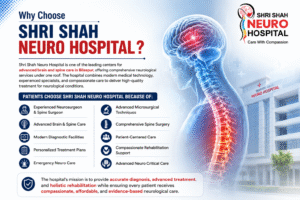
Shri Shah Neuro Hospital is one of the leading centers for advanced brain and spine care in Bilaspur, offering comprehensive neurological services under one roof. The hospital combines modern medical technology, experienced specialists, and compassionate care to deliver high-quality treatment for neurological conditions.
Patients choose Shri Shah Neuro Hospital because of:
✔ Experienced Neurosurgeon & Spine Surgeon
✔ Advanced Brain & Spine Care
✔ Modern Diagnostic Facilities
✔ Personalized Treatment Plans
✔ Emergency Neuro Care
✔ Advanced Microsurgical Techniques
✔ Comprehensive Spine Surgery
✔ Patient-Centered Care
✔ Compassionate Rehabilitation Support
✔ Advanced Neuro Critical Care
The hospital’s mission is to provide accurate diagnosis, advanced treatment, and holistic rehabilitation while ensuring every patient receives compassionate, affordable, and evidence-based neurological care.
What Is Lumbar Canal Stenosis?
Lumbar Canal Stenosis is a condition in which the spinal canal in the lower back becomes narrowed, reducing the available space for the spinal cord and nerve roots. As the spinal canal narrows, pressure is placed on the nerves, resulting in pain, numbness, weakness, and difficulty walking.
This condition most commonly affects the lumbar (lower back) region because it bears much of the body’s weight and undergoes gradual wear and tear with aging.
Lumbar Canal Stenosis may develop slowly over several years, and symptoms often worsen gradually if left untreated.
Common Symptoms of Lumbar Canal Stenosis
The severity of symptoms varies depending on the amount of nerve compression. Some patients experience only mild discomfort, while others develop significant neurological symptoms that interfere with daily activities.
Common symptoms include:
✔ Persistent lower back pain
✔ Pain radiating into one or both legs
✔ Numbness in the legs
✔ Tingling sensation in the feet
✔ Weakness in the lower limbs
✔ Difficulty walking long distances
✔ Pain that improves while sitting or bending forward
✔ Muscle cramps in the legs
✔ Loss of balance
✔ Difficulty standing for prolonged periods
✔ Heaviness in the legs
✔ Reduced walking capacity
Symptoms usually become worse with prolonged standing or walking and often improve after resting or leaning forward.
Causes of Lumbar Canal Stenosis
Several medical conditions can cause narrowing of the spinal canal.
Common causes include:
✔ Age-related degeneration of the spine
✔ Osteoarthritis
✔ Thickening of spinal ligaments
✔ Herniated (Slipped) Disc
✔ Bone Spurs
✔ Degenerative Disc Disease
✔ Spinal Injuries
✔ Congenital Narrow Spinal Canal
✔ Spinal Tumors (rare)
✔ Previous Spine Surgery
As these conditions progress, they reduce the space available for the spinal nerves, leading to nerve compression and neurological symptoms.
Risk Factors for Lumbar Canal Stenosis
Certain individuals are more likely to develop Lumbar Canal Stenosis because of age, lifestyle, or existing spinal disorders.
Risk factors include:
✔ Age above 50 years
✔ Degenerative spine disease
✔ Osteoarthritis
✔ Previous spinal injury
✔ Heavy physical work
✔ Obesity
✔ Poor posture
✔ Family history of spinal disorders
✔ Congenital spinal abnormalities
✔ Repetitive strain on the lower back
Maintaining good spinal health and seeking early medical evaluation for persistent back pain may help reduce the risk of severe complications.
When Should You See a Neurosurgeon?
Although occasional back pain is common, persistent symptoms associated with nerve compression require specialist evaluation.
Consult a neurosurgeon immediately if you experience:
✔ Severe lower back pain lasting several weeks
✔ Pain radiating down the legs
✔ Progressive numbness
✔ Weakness in one or both legs
✔ Difficulty walking
✔ Loss of balance
✔ Frequent falls
✔ Difficulty controlling bladder or bowel function
✔ Persistent tingling in the legs
✔ Symptoms that worsen despite medications or physiotherapy
Early consultation allows timely diagnosis and appropriate treatment, helping prevent permanent nerve damage and improving the chances of successful recovery.
How Is Lumbar Canal Stenosis Diagnosed?
Accurate diagnosis is essential to determine the severity of nerve compression and select the most appropriate treatment. At Shri Shah Neuro Hospital, Dr. Abhishek Kumar Shah performs a detailed neurological evaluation and recommends advanced imaging studies to confirm the diagnosis.
The diagnostic process usually includes:
✔ Detailed medical history
✔ Physical examination
✔ Neurological examination
✔ Muscle strength assessment
✔ Reflex testing
✔ Walking and balance evaluation
✔ Sensory examination
✔ Spine mobility assessment
Depending on the findings, additional investigations may be advised to accurately identify the cause and extent of spinal canal narrowing.
Imaging Tests for Lumbar Canal Stenosis
Modern imaging techniques help visualize the spine and identify nerve compression, disc problems, and degenerative changes.
Common imaging tests include:
MRI Scan (Magnetic Resonance Imaging)
MRI is considered the most effective investigation for Lumbar Canal Stenosis because it clearly shows:
✔ Narrowing of the spinal canal
✔ Nerve compression
✔ Herniated discs
✔ Ligament thickening
✔ Degenerative spine changes
✔ Soft tissue abnormalities
CT Scan
A CT scan provides detailed images of the spinal bones and helps evaluate:
✔ Bone spurs
✔ Vertebral alignment
✔ Degenerative arthritis
✔ Fractures
X-Ray
Spinal X-rays help identify:
✔ Degenerative changes
✔ Arthritis
✔ Spinal instability
✔ Alignment abnormalities
Although X-rays do not show nerves, they are useful for assessing the bony structures of the spine.
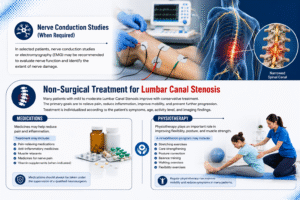
Nerve Conduction Studies (When Required)
In selected patients, nerve conduction studies or electromyography (EMG) may be recommended to evaluate nerve function and identify the extent of nerve damage.
Non-Surgical Treatment for Lumbar Canal Stenosis
Many patients with mild to moderate Lumbar Canal Stenosis improve with conservative treatment. The primary goals are to relieve pain, reduce inflammation, improve mobility, and prevent further progression.
Treatment is individualized according to the patient’s symptoms, age, activity level, and imaging findings.
Medications
Medicines may help reduce pain and inflammation.
Treatment may include:
✔ Pain-relieving medications
✔ Anti-inflammatory medicines
✔ Muscle relaxants
✔ Medicines for nerve pain
✔ Vitamin supplements (when indicated)
Medications should always be taken under the supervision of a qualified neurosurgeon.
Physiotherapy
Physiotherapy plays an important role in improving flexibility, posture, and muscle strength.
A rehabilitation program may include:
✔ Stretching exercises
✔ Core strengthening
✔ Posture correction
✔ Balance training
✔ Walking exercises
✔ Flexibility exercises
Regular physiotherapy can improve mobility and reduce symptoms in many patients.
Lifestyle Modifications
Healthy lifestyle habits can reduce stress on the spine and improve long-term outcomes.
Doctors commonly recommend:
✔ Maintaining a healthy weight
✔ Regular low-impact exercise
✔ Avoiding prolonged standing
✔ Correct sitting posture
✔ Proper lifting techniques
✔ Walking regularly
✔ Avoiding smoking
✔ Managing diabetes and other chronic illnesses
These modifications support spinal health and reduce further degeneration.
Epidural Steroid Injections
For selected patients with severe inflammation and nerve irritation, epidural steroid injections may provide temporary relief by reducing inflammation around the compressed nerves.
These injections are recommended only after proper evaluation by a spine specialist.
When Is Surgery Required?
Surgery is generally considered when conservative treatment fails to relieve symptoms or when nerve compression becomes severe.
Your neurosurgeon may recommend surgery if you experience:
✔ Persistent severe back pain
✔ Progressive leg weakness
✔ Difficulty walking
✔ Severe nerve compression on MRI
✔ Loss of bladder or bowel control
✔ Symptoms affecting daily activities
✔ Failure of non-surgical treatment
Early surgical intervention may prevent permanent nerve damage in appropriate patients.
Advanced Surgical Treatment for Lumbar Canal Stenosis
At Shri Shah Neuro Hospital, advanced spine surgery techniques are used to safely relieve nerve compression while preserving spinal stability whenever possible.
Surgical options may include:
Lumbar Decompression Surgery (Laminectomy)
This is the most commonly performed procedure for Lumbar Canal Stenosis.
During surgery:
✔ The narrowed portion of the spinal canal is enlarged.
✔ Pressure on the spinal nerves is relieved.
✔ Walking ability often improves.
✔ Leg pain and numbness gradually decrease.
Minimally Invasive Spine Surgery
Whenever appropriate, minimally invasive techniques may be used to reduce tissue damage and promote faster recovery.
Benefits include:
✔ Smaller incisions
✔ Less blood loss
✔ Reduced postoperative pain
✔ Faster recovery
✔ Shorter hospital stay
Spinal Fusion Surgery
If spinal instability is present, spinal fusion may be recommended to stabilize the spine after decompression.
The procedure helps:
✔ Improve spinal stability
✔ Reduce abnormal movement
✔ Relieve chronic pain
✔ Support long-term recovery
The choice of surgery depends on the patient’s age, symptoms, MRI findings, and overall spinal condition.
Recovery After Lumbar Canal Stenosis Treatment
Recovery varies depending on the severity of the condition and the treatment performed. Most patients experience gradual improvement with proper rehabilitation and regular follow-up.
Recovery recommendations include:
✔ Follow prescribed medications
✔ Attend physiotherapy sessions
✔ Avoid heavy lifting
✔ Walk regularly as advised
✔ Maintain good posture
✔ Keep follow-up appointments
✔ Perform prescribed exercises
✔ Maintain a healthy body weight
Following the rehabilitation plan helps improve mobility and supports long-term spinal health.
Benefits of Early Treatment
Seeking medical care at an early stage offers the best opportunity to prevent permanent nerve damage and improve quality of life.
Early treatment may help:
✔ Relieve back pain
✔ Reduce leg pain
✔ Improve walking ability
✔ Prevent permanent nerve damage
✔ Improve muscle strength
✔ Restore daily activities
✔ Improve balance
✔ Enhance quality of life
✔ Reduce the need for complex surgery
Timely diagnosis and expert treatment play a key role in achieving successful long-term outcomes.
Why Choose Dr. Abhishek Kumar Shah?
Successful management of Lumbar Canal Stenosis requires accurate diagnosis, advanced surgical expertise, and compassionate patient care. Dr. Abhishek Kumar Shah combines years of neurosurgical experience with modern spine surgery techniques to deliver personalized treatment for every patient.
Patients choose Dr. Abhishek Kumar Shah because of:
✔ More than 14 years of Neurosurgical Experience
✔ Expertise in Brain & Spine Surgery
✔ Advanced Spine Surgery Techniques
✔ Minimally Invasive Spine Procedures
✔ Comprehensive Neurological Evaluation
✔ Modern Diagnostic Facilities
✔ Personalized Treatment Plans
✔ Patient-Centered Care
✔ Advanced Neuro Critical Care
✔ Compassionate Rehabilitation Support
✔ Shri Shah Neuro Hospital – Advanced Brain & Spine Care
His goal is to help every patient regain mobility, relieve pain, and return to an active and healthy life through safe, evidence-based neurosurgical care.
Currently Serving Patients Across Bilaspur
Shri Shah Neuro Hospital provides comprehensive brain, spine, and neurological care for patients across Bilaspur and nearby regions. Led by Dr. Abhishek Kumar Shah, the hospital is committed to delivering advanced diagnosis, modern treatment, and compassionate care for a wide range of neurological and spine disorders.
The hospital offers specialized care for:
✔ Lumbar Canal Stenosis
✔ Cervical Canal Stenosis
✔ Slip Disc (Herniated Disc)
✔ Sciatica
✔ Chronic Neck Pain
✔ Chronic Back Pain
✔ Brain Tumor Surgery
✔ Brain Hemorrhage & Stroke Management
✔ Spine Trauma & Fracture Surgery
✔ Pediatric Neurosurgery
✔ Neurotrauma & Critical Care
✔ Brain Aneurysm Surgery
✔ Peripheral Nerve Disorders
✔ Spine Tumor Surgery
✔ Minimally Invasive Spine Surgery
Patients from Bilaspur and surrounding areas trust Shri Shah Neuro Hospital for expert neurosurgical care, advanced spine treatment, and personalized rehabilitation.
Tips to Prevent Lumbar Canal Stenosis Progression
Although age-related spinal degeneration cannot always be prevented, healthy lifestyle habits may reduce stress on the spine and help slow the progression of lumbar canal stenosis.
Helpful preventive measures include:
✔ Maintain a healthy body weight
✔ Exercise regularly
✔ Strengthen back and core muscles
✔ Maintain correct posture while sitting and standing
✔ Avoid prolonged sitting
✔ Use proper lifting techniques
✔ Avoid smoking
✔ Stay physically active
✔ Control diabetes and osteoporosis
✔ Seek early treatment for persistent back pain
✔ Attend regular medical follow-ups if diagnosed with spinal disorders
These healthy habits can help improve spinal function and reduce the risk of worsening symptoms.
Common Myths About Lumbar Canal Stenosis
Many misconceptions about lumbar canal stenosis prevent patients from seeking timely treatment. Understanding the facts can help patients make informed decisions about their spinal health.
Myth 1: Back Pain Is Always a Normal Part of Aging
Fact: While aging can contribute to spinal degeneration, persistent back pain accompanied by numbness, weakness, or difficulty walking should always be evaluated by a spine specialist.
Myth 2: Lumbar Canal Stenosis Always Requires Surgery
Fact: Many patients experience significant improvement with medications, physiotherapy, lifestyle modifications, and other non-surgical treatments. Surgery is recommended only when conservative treatment is unsuccessful or when severe nerve compression is present.
Myth 3: Complete Bed Rest Is the Best Treatment
Fact: Prolonged bed rest may weaken muscles and delay recovery. Controlled physical activity and physiotherapy are often beneficial for improving mobility and reducing symptoms.
Myth 4: Exercise Makes Lumbar Canal Stenosis Worse
Fact: Appropriate exercises prescribed by a healthcare professional can strengthen spinal muscles, improve flexibility, and reduce pain. High-impact activities should be avoided unless recommended by your doctor.
Myth 5: Leg Pain Always Means a Muscle Problem
Fact: Pain radiating from the lower back into the legs may result from nerve compression caused by Lumbar Canal Stenosis and should be assessed by a neurosurgeon or spine specialist.
Summary
Lumbar Canal Stenosis is a common spinal condition that occurs when the spinal canal narrows and compresses the nerves in the lower back. Symptoms such as persistent lower back pain, leg pain, numbness, tingling, muscle weakness, and difficulty walking can gradually worsen if left untreated. Early diagnosis through neurological examination and imaging studies allows timely treatment, helping prevent permanent nerve damage and improve mobility.
At Shri Shah Neuro Hospital, Dr. Abhishek Kumar Shah provides comprehensive evaluation and personalized treatment for Lumbar Canal Stenosis using advanced diagnostic techniques, non-surgical therapies, and modern spine surgery when required. Early medical intervention, combined with appropriate rehabilitation, helps patients relieve pain, restore function, and return to a more active lifestyle.
FAQs – Lumbar Canal Stenosis: Symptoms, Diagnosis & Treatment
1. What is Lumbar Canal Stenosis?
Lumbar Canal Stenosis is a condition in which the spinal canal in the lower back becomes narrow, placing pressure on the spinal nerves and causing symptoms such as back pain, leg pain, numbness, and difficulty walking.
2. What are the early symptoms of Lumbar Canal Stenosis?
Common early symptoms include lower back pain, numbness or tingling in the legs, pain while walking, leg weakness, and relief of symptoms when sitting or bending forward.
3. How is Lumbar Canal Stenosis diagnosed?
Diagnosis typically involves a medical history, neurological examination, physical assessment, MRI scan, CT scan, X-rays, and, in selected cases, nerve conduction studies.
4. Can Lumbar Canal Stenosis be treated without surgery?
Yes. Many patients benefit from medications, physiotherapy, lifestyle modifications, exercise programs, and epidural steroid injections. Surgery is considered only when symptoms are severe or do not improve with conservative treatment.
5. When is surgery recommended for Lumbar Canal Stenosis?
Surgery may be recommended when patients experience severe nerve compression, progressive weakness, difficulty walking, loss of bladder or bowel control, or persistent symptoms despite non-surgical treatment.
6. Is Lumbar Canal Stenosis a permanent condition?
The spinal narrowing itself may not completely reverse, but appropriate treatment can effectively reduce symptoms, improve mobility, and enhance quality of life.
7. How long does recovery take after Lumbar Canal Stenosis surgery?
Recovery varies depending on the patient’s overall health, the severity of the condition, and the type of surgery performed. Most patients gradually improve with physiotherapy and regular follow-up care.
8. Who should I consult for Lumbar Canal Stenosis Treatment in Bilaspur?
Dr. Abhishek Kumar Shah, an experienced Neurosurgeon and Spine Surgeon at Shri Shah Neuro Hospital, provides comprehensive diagnosis and treatment for Lumbar Canal Stenosis and other spine disorders in Bilaspur.
Conclusion – Lumbar Canal Stenosis: Symptoms, Diagnosis & Treatment
Lumbar Canal Stenosis can significantly affect mobility, independence, and overall quality of life if left untreated. Persistent lower back pain, numbness, tingling, leg weakness, or difficulty walking should never be ignored, as these symptoms may indicate compression of the spinal nerves. Early diagnosis, appropriate treatment, and regular follow-up play a crucial role in preventing complications and restoring normal function.
At Shri Shah Neuro Hospital, Dr. Abhishek Kumar Shah offers advanced care for Lumbar Canal Stenosis through accurate diagnosis, personalized non-surgical management, and modern spine surgery when required. With extensive experience in brain and spine disorders, advanced medical technology, and a compassionate patient-centered approach, the hospital is dedicated to helping patients regain mobility, relieve pain, and enjoy a healthier, more active life.