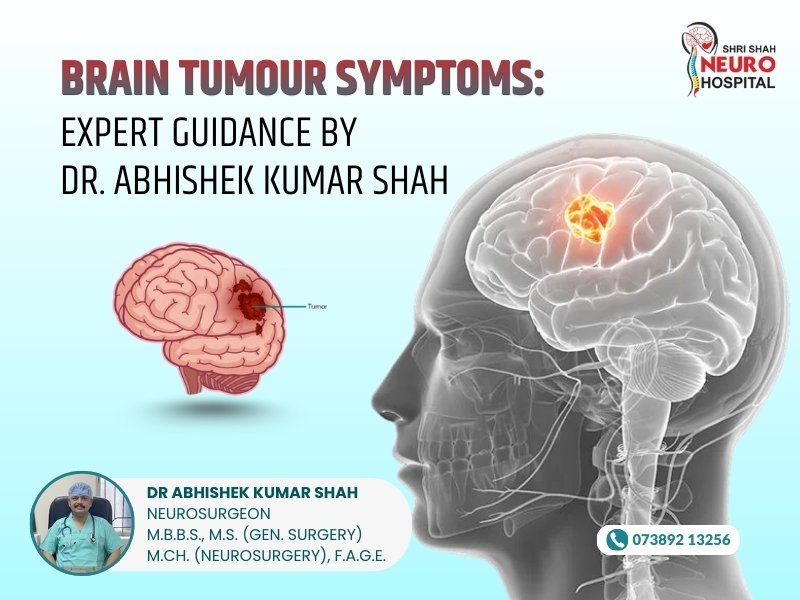
When it comes to neurological health, early detection can save lives. Brain tumours are one of the most complex and serious conditions affecting the nervous system. However, many people often ignore the early signs, mistaking them for common headaches or stress-related problems.
To raise awareness, Dr. Abhishek Kumar Shah, a leading Neurosurgeon in Bilaspur, shares valuable insights into the common symptoms of brain tumours, their causes, and when you should consult a doctor.
Who is Dr. Abhishek Kumar Shah?
Dr. Abhishek Kumar Shah is a highly experienced and renowned Neurosurgeon in Bilaspur, with over 14 years of expertise in brain and spine surgery. He is the founder and head neurosurgeon at Shri Shah Neuro Hospital, located on Ring Road No. 2, near Mangla Chowk, Bilaspur.
Having worked in leading medical institutions like Sir Ganga Ram Hospital (New Delhi), Manipal Hospital, and Narayana Hospital, Dr. Shah brings exceptional skill and compassion to every patient he treats. His focus is on diagnosing and managing complex brain and spine disorders with precision and care.
Understanding Brain Tumours
A brain tumour is an abnormal growth of cells inside the brain or surrounding structures. It can be benign (non-cancerous) or malignant (cancerous).
Even a benign tumour can cause serious health problems because the skull is a closed structure — any extra growth can put pressure on vital parts of the brain.
Dr. Abhishek Kumar Shah explains that early recognition of symptoms plays a crucial role in preventing long-term complications and improving recovery chances.
Common Symptoms of Brain Tumour
The symptoms of a brain tumour depend on its size, type, and location in the brain. Below are some of the most common signs that Dr. Abhishek Kumar Shah advises people not to ignore.
1. Persistent or Severe Headaches
Headaches are one of the most common symptoms. However, headaches caused by a brain tumour are different from normal headaches.
According to Dr. Abhishek Kumar Shah, these headaches:
-
Are often worse in the morning
-
May get intense over time
-
Don’t respond well to regular painkillers
-
Are often accompanied by nausea or vomiting
If you experience persistent headaches with these patterns, it’s important to seek medical evaluation immediately.
2. Unexplained Nausea and Vomiting
Frequent nausea or vomiting, especially when not related to food or stomach issues, can be an early warning sign of increased pressure inside the skull.
Dr. Shah explains that this pressure (known as intracranial pressure) occurs when a tumour grows and compresses nearby brain tissue.
3. Vision or Hearing Problems
A brain tumour can affect the areas responsible for vision and hearing.
Common symptoms include:
-
Blurred or double vision
-
Loss of peripheral vision
-
Ringing in the ears (tinnitus)
-
Partial hearing loss
Dr. Abhishek Kumar Shah advises that such symptoms should never be ignored, especially when they occur suddenly or without a clear cause.
4. Seizures or Convulsions
Seizures are sudden bursts of electrical activity in the brain. They can appear as full-body convulsions or minor muscle twitching.
Even people with no prior history of epilepsy can experience seizures due to a brain tumour.
If someone experiences an unexplained seizure, Dr. Shah recommends immediate neurological consultation.
5. Problems with Balance or Coordination
If a tumour affects the cerebellum (the part of the brain that controls movement and coordination), patients may experience:
-
Loss of balance while walking
-
Clumsiness or frequent falls
-
Difficulty performing daily tasks requiring coordination
Dr. Abhishek Kumar Shah notes that such symptoms are particularly important in older adults, where early diagnosis can prevent severe complications.
6. Memory Loss and Cognitive Decline
Tumours in the frontal or temporal lobes can impact memory, concentration, and personality.
Patients may notice:
-
Forgetting names, dates, or events
-
Trouble following conversations
-
Difficulty making decisions
-
Unexplained changes in mood or personality
According to Dr. Shah, these signs are often mistaken for stress or aging but may indicate an underlying neurological issue.
7. Weakness or Numbness in Limbs
When a brain tumour affects motor areas, it can cause weakness or numbness in one side of the body (called hemiparesis).
You may notice:
-
One arm or leg feels weaker than the other
-
Trouble gripping objects
-
Difficulty walking or maintaining balance
These symptoms require immediate evaluation by a neurosurgeon like Dr. Abhishek Kumar Shah.
8. Speech or Language Difficulties
Tumours in the left hemisphere (which controls language) can lead to problems such as:
-
Difficulty speaking clearly
-
Trouble finding the right words
-
Inability to understand spoken or written language
If someone suddenly starts experiencing such communication problems, it’s a strong warning sign to visit a neuro specialist right away.
9. Personality or Behavioral Changes
A brain tumour can affect the parts of the brain that regulate mood, emotions, and behavior.
Dr. Shah highlights that patients might show:
-
Increased irritability or aggression
-
Depression or anxiety without a clear reason
-
Loss of interest in social or professional activities
These changes can be subtle but may indicate pressure on the frontal lobes.
10. Fatigue and Sleep Disturbances
Constant fatigue, loss of energy, and irregular sleep patterns are also common.
According to Dr. Abhishek Kumar Shah, these may occur because the tumour disrupts normal brain function or due to hormonal imbalances caused by pituitary involvement.
When Should You See a Doctor?
If you or someone you know experiences multiple symptoms simultaneously, or if they progress over time, it’s crucial to consult a qualified Neurosurgeon.
Dr. Abhishek Kumar Shah emphasizes that early diagnosis through MRI or CT scans can lead to more effective treatment and better recovery outcomes.
How Brain Tumours Are Diagnosed
Diagnosis involves a combination of the following tests:
-
Neurological examination – checks reflexes, coordination, and vision.
-
MRI/CT Scan – provides detailed brain images to locate the tumour.
-
Biopsy – determines whether the tumour is benign or malignant.
-
Blood tests and hormone studies – if the tumour affects the pituitary gland.
Dr. Shah’s team at Shri Shah Neuro Hospital ensures a thorough diagnostic approach using advanced technology and expertise.
Treatment Options for Brain Tumours
Treatment depends on the type, size, and location of the tumour.
At Shri Shah Neuro Hospital, Dr. Abhishek Kumar Shah and his team offer a range of specialized treatments, including:
-
Microsurgical Tumour Removal
– Performed using advanced microscopes for precision and safety. -
Minimally Invasive Neuroendoscopy
– Smaller incisions, faster recovery, and reduced complications. -
Radiation Therapy and Chemotherapy
– For malignant or inoperable tumours. -
Rehabilitation and Physiotherapy
– Helps patients regain strength and mobility after surgery.
Living with a Brain Tumour – Dr. Shah’s Advice
Dr. Abhishek Kumar Shah believes that early detection, proper treatment, and emotional support are the keys to managing life after a brain tumour diagnosis.
He advises:
-
Don’t ignore persistent headaches or neurological symptoms.
-
Go for regular health checkups, especially if there’s a family history of tumours.
-
Follow a healthy lifestyle, with adequate rest, nutrition, and exercise.
-
Stay connected with your healthcare provider for continuous monitoring.
About Shri Shah Neuro Hospital, Bilaspur
Shri Shah Neuro Hospital is a leading neuro care center in Bilaspur, offering advanced facilities for brain and spine treatment.
Located conveniently near Mangla Chowk, the hospital is equipped with:
-
Modern operation theatres
-
MRI and CT scan facilities
-
24×7 emergency neuro care
-
Expert medical and nursing team
Under the leadership of Dr. Abhishek Kumar Shah, the hospital has become one of the most trusted names in neurosurgery in Chhattisgarh.
Final Thoughts
Brain tumours can be life-threatening, but early recognition of symptoms can make all the difference.
By being aware of the common symptoms of brain tumour, you can take timely action and seek expert help.
If you or your loved ones are experiencing persistent headaches, vision changes, or unexplained weakness, don’t delay — book a consultation with Dr. Abhishek Kumar Shah, the best neurosurgeon in Bilaspur, at Shri Shah Neuro Hospital today.