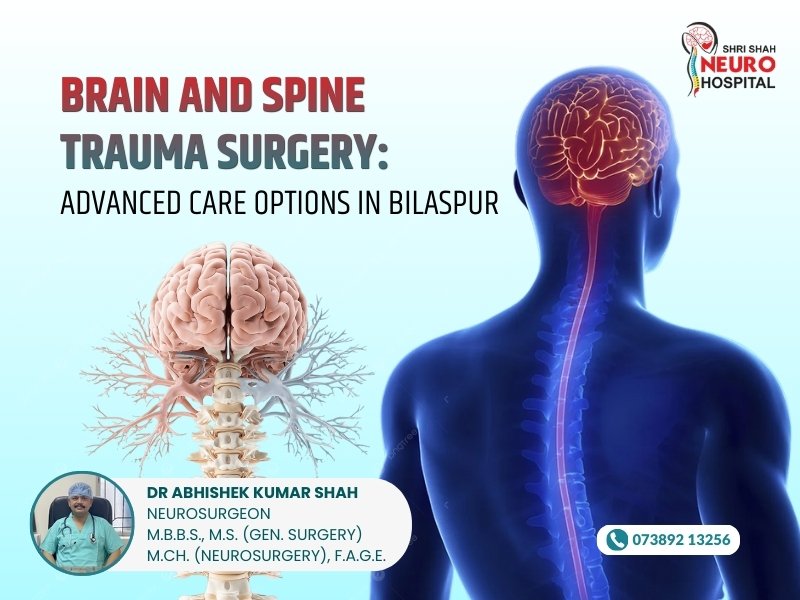
When a person suffers a serious accident, fall, or injury to the head or back, the damage often goes far beyond what can be seen from the outside. The brain and spine are the body’s control centers—they manage thinking, movement, speech, sensation, and even breathing. Any injury to these delicate structures requires immediate, expert medical attention. This is why Brain and Spine Trauma Surgery in Bilaspur plays a crucial, life-saving role in emergency care.
Under the guidance of Dr. Abhishek Kumar Shah, a highly experienced Neurosurgeon in Bilaspur, patients receive prompt diagnosis, advanced surgical treatment, and compassionate care. His approach focuses not only on treating the injury but also on supporting recovery, helping patients and families regain confidence, function, and quality of life after trauma.
Common Types of Brain and Spine Injuries
1. Traumatic Brain Injury (TBI)
This happens when the brain is shaken or struck inside the skull. It can range from a mild concussion to severe brain bleeding.
2. Skull Fractures
Cracks or breaks in skull bones may press on brain tissue or cause bleeding.
3. Spinal Fractures
Breaks in spinal bones can compress nerves and affect movement or sensation.
4. Spinal Cord Injury
Damage to the spinal cord can lead to weakness, paralysis, or loss of sensation.
Patients from Narmada Nagar, Bilaspur often reach hospitals late due to underestimating symptoms. Early Brain and Spine Trauma Surgery in Bilaspur prevents permanent damage.
Warning Signs You Should Never Ignore
After a fall, accident, or any injury to the head or back, certain symptoms can signal a serious brain or spine problem. Immediate medical attention is essential if you notice any of the following:
- Severe or worsening headache that does not improve
- Dizziness or difficulty maintaining balance
- Confusion, disorientation, or memory loss
- Repeated episodes of vomiting
- Weakness, numbness, or tingling in the arms or legs
- Difficulty walking or loss of coordination
- Loss of consciousness, even for a few seconds
- Seizures or fits
These warning signs may indicate internal bleeding, swelling, or nerve damage. Timely Brain and Spine Trauma Surgery in Bilaspur can prevent permanent damage and may be life-saving. Early evaluation by an experienced neurosurgeon ensures the best chance of recovery.
How Brain and Spine Trauma Is Diagnosed
Dr. Abhishek Kumar Shah follows a careful and systematic approach to diagnosis:
- Clinical examination to assess consciousness, strength, reflexes, and sensation
- CT Scan for quick detection of bleeding or fractures
- MRI Scan to assess spinal cord and brain tissue damage
- Neurological tests to evaluate nerve function
Patients from Gaurav Path, Bilaspur benefit from early imaging that allows quick treatment decisions.
Treatment Options for Brain and Spine Trauma
Treatment for brain and spine trauma is decided based on how severe the injury is, which part of the brain or spine is affected, and the patient’s overall condition. Early and correct treatment plays a major role in recovery.
Non-Surgical Treatment
Non-surgical care is usually recommended for mild to moderate injuries where there is no major bleeding, fracture, or nerve damage.
- Bed rest and close observation: Helps the brain and spine heal naturally while doctors monitor for any worsening symptoms.
- Medications: Pain relievers, anti-swelling drugs, and medicines to protect brain function are prescribed.
- Regular neurological monitoring: Doctors repeatedly check reflexes, strength, balance, and alertness to ensure stability.
- Physiotherapy and rehabilitation: Gentle exercises improve strength, movement, and balance, supporting a safe and gradual recovery.
Surgical Treatment
Surgery becomes necessary when the injury is severe and life-threatening, or when nerves and vital structures are under pressure.
- Brain surgery: Performed to remove blood clots, stop internal bleeding, or reduce dangerous pressure inside the skull.
- Spine surgery: Stabilizes fractured or displaced vertebrae to protect the spinal cord and prevent paralysis.
- Nerve decompression procedures: Relieve pressure on compressed nerves to restore sensation and movement.
Timely and advanced Brain and Spine Trauma Surgery in Bilaspur helps prevent further damage, restores lost function, and significantly improves long-term outcomes for patients.
Life After Surgery – Recovery and Rehabilitation
Recovery after trauma surgery is a step‑by‑step journey:
- Hospital monitoring after surgery
- Pain and infection management
- Physiotherapy to regain movement and strength
- Occupational therapy for daily activities
- Emotional counseling for mental well‑being
Patients from Koni Colony, Bilaspur often show better outcomes when rehabilitation starts early.
Emotional and Family Support Matters
Trauma affects not only the patient but the entire family. Fear, stress, and uncertainty are common. Dr. Abhishek Kumar Shah believes healing is not only surgical—it is emotional too. Clear communication, guidance, and reassurance help families cope better during recovery.
Why Choose Dr. Abhishek Kumar Shah?
Dr. Abhishek Kumar Shah is a highly respected Neurosurgeon in Bilaspur with over 14 years of experience in managing complex brain and spine injuries. His approach combines advanced medical skills with compassionate care, ensuring the best possible recovery for patients.
Patients choose him for Brain and Spine Trauma Surgery in Bilaspur because of:
- Advanced trauma surgery techniques: Use of modern, evidence-based surgical methods for safe and precise treatment.
- Clear and simple communication: Every condition and treatment step is explained in easy-to-understand language for patients and families.
- Patient-centered treatment plans: Care is customized based on injury severity, age, and recovery goals.
- Strong focus on rehabilitation: Equal importance is given to post-surgery recovery, physiotherapy, and long-term function.
- Compassionate family support: Continuous guidance and emotional support throughout the treatment journey.
His expertise in Brain and Spine Trauma Surgery in Bilaspur has helped many patients regain mobility, confidence, and independence, allowing them to return to meaningful and active lives.
Frequently Asked Questions – Brain and Spine Trauma
Q1. Can symptoms appear days after an injury?
Yes. Signs of brain or spine injury may develop slowly over hours or even days. That is why early evaluation and timely Brain and Spine Trauma Surgery in Bilaspur are important to prevent complications.
Q2. How long does recovery usually take?
Recovery depends on the severity of the injury. Mild trauma may heal within a few weeks, while serious injuries may take several months with proper rehabilitation and follow-up care.
Q3. Is surgery required in every case?
No. Many mild injuries improve with observation, medications, and physiotherapy. Brain and Spine Trauma Surgery is recommended only when there is bleeding, pressure on nerves, or spinal instability.
Q4. Are children at risk of long-term complications?
Children often recover faster, but without early treatment, long-term problems can occur. Prompt care by a specialist ensures safe healing and normal development.
Q5. Who should treat brain or spine trauma?
Brain and spine injuries should always be managed by an experienced Neurosurgeon in Bilaspur, such as Dr. Abhishek Kumar Shah, for accurate diagnosis, timely treatment, and the best recovery outcomes.